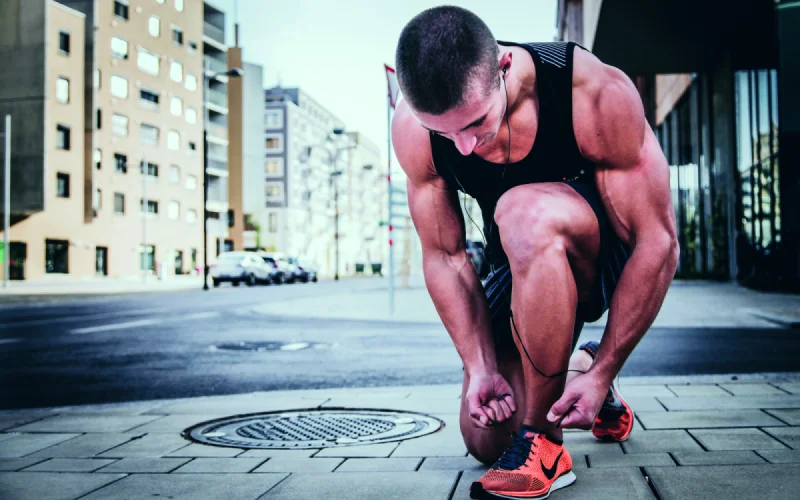
The WHO recommends adults engage in at least 150 minutes of moderate sport per week. Moderate sport boosts fat burning and thereby counteracts the increased formation of inflammation-promoting substances. Moreover, sport can protect against diabetes, supports a healthy cardiovascular system, and reduces stress hormones. The ancient Romans already appreciated the effects of moderate sport: "Mens sana in corpore sano." ("A healthy mind lives in a healthy body.")
Increased nutrient requirements in competitive athletes
But what about competitive and extreme sports? "More is more" unfortunately doesn't always apply and is particularly a dangerous misconception regarding sport. Extreme physical exertion increases the body's nutrient requirements and can even harm health without adequate nutrient supply.
Anyone who thinks that a balanced and healthy diet can eliminate the risk of nutrient deficiency during intense physical exertion is unfortunately mistaken. The nutrient content of our food has been declining continuously for decades.
Declining nutrient supply through healthy eating
This is due to the dilution effect demonstrated by Jarrell and Beverly in 1981. Through the use of fertilizers and other measures, the agricultural yield of fruits and vegetables has continuously increased since the 1940s, but the concentration of minerals and nutrients has decreased. Davis et al. examined this dilution effect in 2004 and found that the protein content in the 43 fruits and vegetables examined decreased by 6 percent, while the vitamin content decreased by up to 38 percent[1].
The following table also illustrates the decline of vital minerals in our food:

Figure1: Nutrient decline in food, Mayer (1997), White (2005), Davis (2008), Wang (2009);
Frequent nutrient deficiency in competitive athletes
Given this nutrient decline in our daily food, it is not surprising that studies show that especially elite athletes often suffer from nutrient deficiencies due to their increased requirements:

Figure 2: Number of football players with inadequate supply of vitamins and minerals (in %), Gröber (2008), Manore (2000)
In elite sports, the body is regularly pushed to its limits. Once the body has depleted its energy reserves, it begins to use amino acids for energy production. Therefore, doctors report not only inadequate nutrient supply but also widespread inadequate supply of amino acids and co-enzymes in elite athletes.
A deficiency of nutrients, amino acids and co-enzymes can result in the following symptoms, among others:
- Fatigue
- Concentration problems
- Physical weakness
- Depressive mood
- Increased risk of injury
- Prolonged recovery times
- Muscle loss
- Painful limitations of the musculoskeletal system
- Loss of libido
Competitive sports as a cause of oxidative stress
During metabolic processes for energy production in the body, waste products in the form of oxygen radicals are created alongside energy. These oxygen radicals are also called free radicals and are, from a chemical perspective, oxygen molecules that lack an electron. Therefore, they strive to steal an electron from other molecules. If they succeed due to a lack of antioxidants in the body, new molecules with a missing electron are created. This begins a chain reaction, which is referred to as oxidative stress.
It is scientifically proven that intense physical activity causes oxidative stress². Due to increased metabolism, more free radicals are created in the body. If the body does not have sufficient antioxidants, oxidative stress occurs. Blood values with which the extent of oxidative stress in the body can be measured are usually elevated 24-48 hours after physical exertion. It is no coincidence that exertion-related complaints such as muscle soreness, exhaustion, inflammation, and pain in the muscle and tendon area occur precisely within this timeframe.
The consequences of oxidative stress on muscles, joints, and cells
In addition to numerous other harmful effects on health, oxidative stress promotes inflammation of muscles and tendons, slows down and hinders their regeneration, and disrupts collagen production in the joints.
The high stress from competitive sports alone promotes joint wear and tear. Oxidative stress intensifies this process further through its negative influence on collagen production. The consequences can be painful wear and tear (osteoarthritis) as well as inflammation in the joints (arthritis). Various studies have clearly demonstrated this connection between oxidative stress and arthritis³.
Mitochondria are referred to as the powerhouses of cells. From the energy supplied through food, they produce energy in the form of ATP. Oxidative stress leads to an inhibition of ATP synthesis and ultimately to a collapse of the cell's energy metabolism and thus to its death. This can even be visualized: The following graphic shows a comparison between intact mitochondria and mitochondria permanently damaged by oxidative stress and nutrient deficiency:

Figure 3: courtesy of the BIOVIS laboratory
If the number of intact mitochondria decreases, less and less ATP is produced. Eventually, the cells do not receive enough energy and can no longer perform their functions. The consequences can range from slowed regeneration and wound healing to decreased performance to chronic fatigue syndrome.
Nutritional supplementation
When competitive athletes are made aware of their nutrient deficiency and take substitution into their own hands, overdosing of certain nutrients frequently occurs due to lack of knowledge, while simultaneously maintaining deficiency in other nutrients[4]. Thus, the symptoms and dangers of nutrient deficiency persist, at least in part.
Sanopoly has investigated nutrient deficiency in many athletes and compiled a dietary supplement that addresses all deficiencies associated with increased physical exertion: Priosa® athleticum. Priosa® athleticum consists of exactly the nutrients that the body of athletes needs and cannot absorb sufficiently through food. Thus, the body of athletes is well supplied and no burdensome metabolic byproducts and no overdosing occur.
Particularly valuable for rapid muscle regeneration, well-functioning mitochondria, and healthy joints are the contained SOD and methionine.
The enzyme SOD (superoxide dismutase) has an additional electron that it can transfer to free radicals. This allows it to neutralize free radicals without becoming a free radical itself. Thus, SOD is an effective antioxidant that interrupts the chain reaction of oxidative stress in the body and can thereby protect against inflammation in muscles and joints and declining energy production in the mitochondria, while accelerating regeneration after physical exertion.
Methionine supports the body's own sulfur production. Without sulfur, there is no cartilage formation, as recent studies also demonstrate: The cartilage of healthy people contains approximately three to four times as much sulfur as the cartilage of people suffering from arthritis. Thus, Priosa® athleticum supports regeneration after strenuous physical exertion and counteracts inflammation in muscles and joints as well as muscle breakdown and joint wear.
The feedback from elite athletes is consistently positive: They report fewer muscle cramps, faster healing after injuries, improved performance, and faster regeneration after strenuous physical exertion.
Naturally, Sanopoly adheres to the strictest doping guidelines, which is why Priosa® athleticum is also listed as unproblematic on the Cologne List.
Conclusion
Athletes have increased nutritional requirements. Due to nutrient decline in our daily food, it is difficult for athletes to meet their increased needs through diet alone. A drop in performance, exhaustion, muscle breakdown, prolonged regeneration times, and painful changes to the musculoskeletal system can be the consequence.
Those who want to continuously perform athletically without damaging their body and health should replace missing nutrients and supply the body with everything it needs.
With Priosa® athleticum, Sanopoly has developed a nutritional supplement specifically designed for the needs of athletes, so the body can withstand even strenuous physical exertion without suffering permanent damage.
Studies:
[1] W. M. Jarrell and R. B. Beverly (1981), The Dilution Effect in Plant Nutrition Studies, in: N. C. Brady et al, Advances in Agronomy, Academic Press, Waltham, p. 197-224
DR Davis et al., Changes in USDA food composition data for 43 garden crops 1950 to 1999, http://saveoursoils.com/userfiles/downloads/1351255687-Changes%20in%20USDA%20food%20composition%20data%20for%2043%20garden%20crops,%201950- 1999.pdf
[2] A. Berg and D. König, Oxidative Stress and Sport, German Journal of Sports Medicine, Volume 51, No. 5.x
[3] C. M. Quinonez-Flores et al., Oxidative Stress Relevance in the Pathogenesis of Rheumatoid Arthritis, https://www.ncbi.nlm.nih.gov/pmc/articles/PMC4906181/, 31.05.2016
[4] Sleep in elite athletes and nutritional interventions to enhance sleep, Halson SL, Sports Med., May 2014, 44 Suppl 1, p. 13-23.